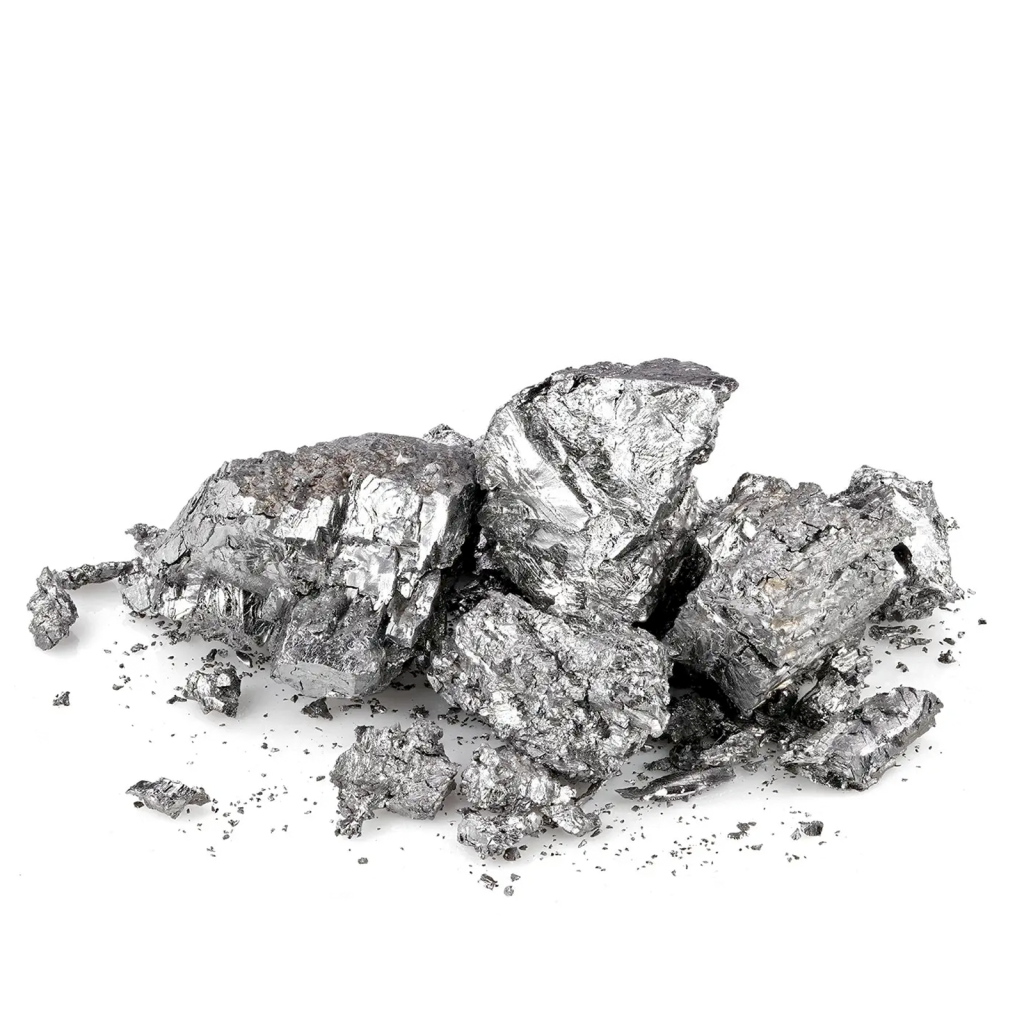
Rare earth elements (REE) consist of 15 elements known as the Lanthanide series. They appear in the Periodic Table from numbers 57 to 71. There are two additional elements, Scandium and Yttrium, numbers 21 and 39 respectively, which have a similar physiochemistry as the lanthanides and are usually included as a part of this group when REEs are discussed.
REE can be found all over the world, however the term ‘rare’ comes from the fact they usually occur in small quantities in the earth’s crust. Deposits do, however, exist in sufficient quantities to be commercially developed around the world. They usually occur in four geological deposits: alkaline igneous rocks, carbonatites, placer deposits (in rocks formed in sedimentary processes) with monazite-xenotime mineralisation and ion-adsorption clay deposits caused by weathering of rocks over local periods forming clays.
REE are divided into light (LREE) and heavy (HREE) based on their atomic weights. Scandium falls outside this classification even though it occurs in the same ore bodies as REE.
LREE include Lanthanum (57), Cerium (58), Praseodymium (59), Neodymium (60), Promethium (61) and Samarium (62).
HREE include Europium (63), Gadolinium (64), Terbium (65), Dysprosium (66), Holmium (67), Erbium (68), Thulium (69), Ytterbium (70) and Lutetium (71). Yttrium (39) has a lower number on the periodic table, however it shares the same properties as the HREE and is classified with them as it occurs in the same ore bodies.
While REE are silvery-white as an ore, when refined into oxide (REO) they take on a range of pastel colours from aqua, blue, lavender, lime-green, white, yellow and pink. This is because ‘… each lanthanide ion, with its unique electronic configuration, will have different excited states and different excitation energies. Therefore, their absorption spectra differ and they display different colours.’1 Some REE have a biological role and all of them have low or no toxicity. Only Scandium has some level of toxicity.
There are hundreds of applications for REE and they play a huge role in the technologies used today. The information below outlines some of these uses. Due to the increasing demand for REE, companies are increasingly searching for new deposits. As deposits of less common REE are discovered, opportunities for the development of new technologies will evolve.
For more information on individual REE, the Royal Society of Chemistry website (www.rsc.org) is a useful guide for information on each element, its properties and uses.